I’ve sat where you’re sitting.
For twenty years leading three international schools, I made more hiring decisions than I can count. Some were the best decisions I ever made. Others taught me how much the process was leaving to chance. And the honest truth is that when I look back at both — the great hires and the ones that didn’t fit, I knew my process didn’t predict which would be which.
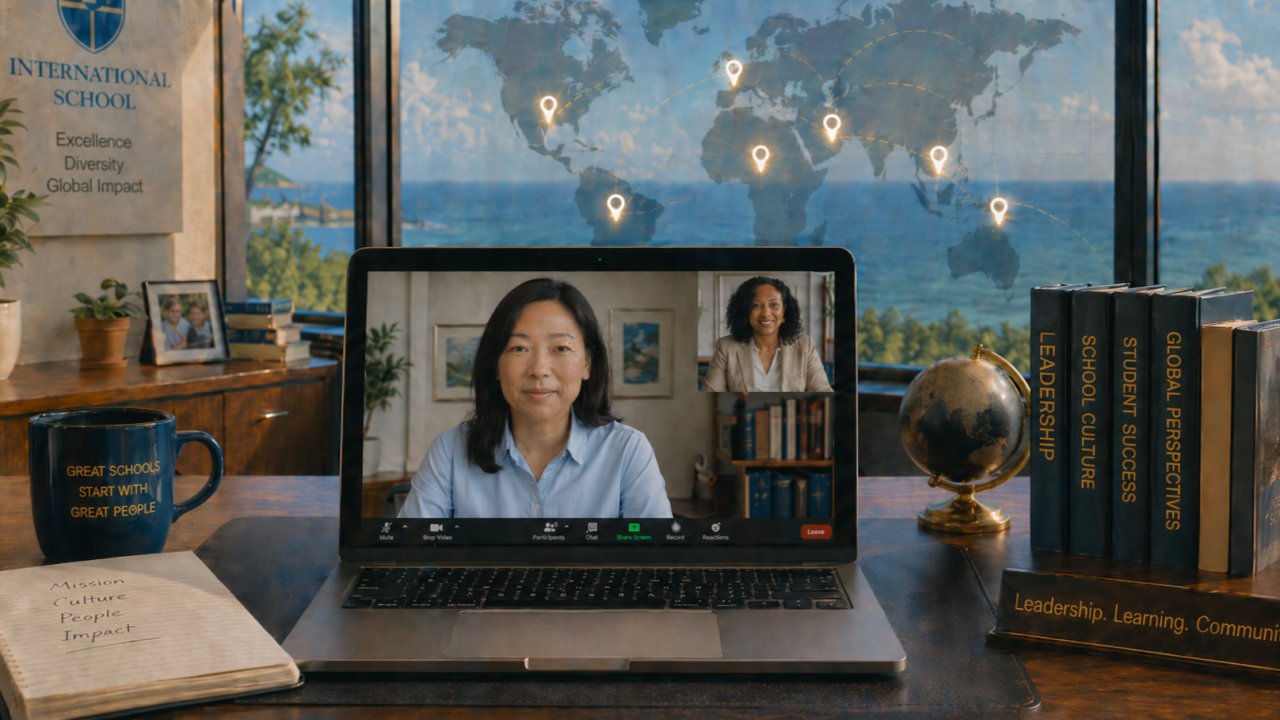
I read the same polished resumes you read, now completed by AI. I conducted the same zoom interviews across time zones. I called references at schools I’d never met, listening carefully for what wasn’t being said. I made five and six-figure offers, paid for relocation, sponsored visas, and introduced new hires to my community all while carrying the quiet weight of knowing I was making a high-stakes bet on limited information.
If you’re a school leader, you know exactly what I’m describing. Hiring is hard work and arguably the single most important thing leaders can do to improve a school.
I Was Making Decisions in the Dark
When we think about the hires that don’t work out, they follow a similar pattern. The candidate interviews beautifully. Their references glow. On paper, they look like what we need. But after they arrive, months later, it becomes clear that what the school needed and what the candidate offered weren’t the same thing. This isn’t fair to anyone.
The problem wasn’t effort or intention. The problem was data. In an international school, you don’t have the luxury of informal knowledge. You rarely can call a colleague who worked down the hall from the candidate. You can’t visit their school. You can’t see them navigate a real situation in real time. The only information you have is what the candidate chooses to present. And candidates are very good at presenting.
I used to tell myself that experience and intuition would fill the gap. Sometimes they did. But the research tells a different story. Schmidt and Hunter’s landmark meta-analysis, updated by Sackett and colleagues in 2022, found that resumes and unstructured interviews predict job performance at just 0.19 on a 0–1 scale. Work-sample assessments and structured simulations reach 0.44 — more than double. For twenty years, I was relying on the least predictive tools available.
When You Get It Wrong, Everyone Loses
The wrong hire at a domestic school is expensive. A wrong hire at an international school amplifies everywhere.
The family relocates, the apartment is furnished, the visa is processed, months are invested in onboarding. And within a semester, it’s clear the fit isn’t there. Their leadership approach doesn’t match what the team and community need at that moment. The cost isn’t just financial, though that’s significant. It’s the toll on faculty trust, parent confidence, and the team’s momentum.
In a small international school community, there’s nowhere to hide a misaligned hire. Everyone feels it. And the recovery takes longer than the search that caused it.
What I Wish I’d Had
What I wanted, what I needed, was a way to see candidates lead and demonstrate their skills before I hired them. Not in a rehearsed interview. Not in a written exercise they could draft and polish over a weekend. In a live, realistic scenario where they had to navigate the kind of challenge they’d actually face in the role.
I wanted to see who can sit across from an angry parent and stay steady. Who actually listens when a teacher comes to them struggling. Who can make a hard call without clean information and own it. I wanted to see that from every candidate — not just the finalists, and not just on their best day.
That tool didn’t exist when I was a head. So after I left the headship, we went to work and built it.
Schools on four continents are already using evidence-based simulations to evaluate candidates before they extend an offer. The technology exists. The research supports it. And school leaders are right to expect more from the process than what we’ve been settling for.
From Crossed Fingers to Evidence
I didn’t write this because I figured hiring out. I wrote it because after twenty years I finally stopped accepting that uncertainty was just part of the deal. It doesn’t have to be. The tools exist to actually see how someone leads and teaches before you hand them the keys. I wish I’d had them sooner.
International schools deserve better processes than those designed for a world where geography limited options and trust were built through proximity. The world has changed. The talent pool is global. The tools to evaluate that talent should be just as sophisticated as the schools doing the hiring.
The schools that figure this out first won’t just make better hires. They’ll build stronger teams, retain their best leaders, and create the kind of stability that transforms a school from a place people pass through into a place people build careers.
I know, because those are the schools I spent twenty years trying to build.